Organizational- and system-level characteristics that influence implementation of shared decision-making and strategies to address them – a scoping review

Self-management not only means to deal with the current condition, but also pursuing a holistic approach to mental and physical wellbeing. Self-management complements medical treatment to become more effective and successful. “Self-management has empowered me to better know and understand myself on so many levels” explains Jacqueline Bowman-Busato in her contribution.

For at least the past 23 years, I’ve been living with two complex chronic, relapsing diseases: Autoimmune Hashimoto’s and obesity. And yet, I can only say that it’s been the last 18 months where I have finally felt in control of my two diseases in any meaningful way. And this has been due to finally understanding and embracing responsible self-management.

Let me explain from a patient’s perspective. When I consciously started the journey of firstly realising that I had “a thyroid problem” which eventually was diagnosed as autoimmune hashimotos, I didn’t understand that a simple pill wasn’t enough to minimise symptoms. Critically, none of my medical specialists seemed to know or care about this fact either. The resultant search for energy in the wrong places aggravated my hashimotos symptoms (severe malabsorption of vitamin D and B as well as iron which all present as depression and severe anxiety). And all very quickly led to developing obesity. I never discussed obesity with my GP for 20 years (the average is 6 years according to a new study Action IO). I “dealt with it” by following holistic diets which always had a beginning, middle and very quick end!

Self-management has empowered me to better know and under-stand myself on so many levels.

It´s time to change

It was not until 18 months post bariatric surgery on 4 July 2016 that everything finally clicked into place for me. I realised that regardless of the good intentions of the public health environment, the sad fact of today’s chronic disease environment is medical treatment of physical manifestations rather than a holistic approach to mental as well as physical wellbeing, not to mention a lack of positive motivation to work together with health professionals in an empowering and empowered way.

Self-management has meant that I have had to take a very long and hard look at myself, the good, the bad and the very ugly truths in order to forge a personal pathway towards managing my life in such a way to optimise my mental health and wellbeing. Armed with my newly gained (and acknowledged) self-knowledge, I forged my own objectives-driven processes for achieving my goal of “mental clarity”. For me, brain fog has been my biggest barrier to sustainable management of both hashimotos and obesity. Having an objective of brain clarity rather than weight or specific blood values has meant that I’ve been able to take control of my health much more than if I solely relied on medication and then wondered why I was still malnourished to the point of continuing to seek energy in foods which are basically poison to me. Giving myself parameters with well-defined processes has significantly empowered me and raised my confidence levels to collaborate with my health care team. I am now listened to and heard.

Jacqueline_Bowman-Busato

Jacqueline Bowman-Busato

As a patient representative, Jacqueline has advised the Innovative Medicines Initiative (IMI) on patient engagement strategy, and provides expert advice to the European Commission on self-care policies. She works extensively on European as well as global projects bringing the key stakeholders together to build lasting consensus on global, regional and national levels.

Empowerment through self-management

Science very clearly states that obesity is a chronic relapsing disease. It‘s not the fault of one or other individual. In my world, that does not mean that I have to accept whatever medication I’m given in isolation. It means that I use the treatment (in my case the radical treatment of bariatric surgery) as a tool and I supplement with my own process for mental and physical wellbeing to put me on an even playing field to be able to optimise the medical treatment. Self-management empowers me to engage with the system and my health professionals. It allows me to give myself a bit of certainty which is not anxiety causing. It allows me to feel a partner in my own health. Self-management has empowered me to better know and understand myself on so many levels.
Self-management on the go! The role of apps in self-management of chronic conditions

Self-management of a chronic disease is a worthy goal but can be hard to reach. The development of self-management apps promises to ease self-management but despite the continuous development and some promising results there is still mixed evidence on the effectiveness of self-management apps.

The development of self-management apps has come with the promise of delivering self-management interventions with lower costs, easily accessible and potentially adaptable to the user (Whitehead & Seaton, 2016). And indeed, mobile technologies have been increasingly introduced into daily practice, particularly for patient communication, monitoring, and education, and to facilitate adherence to chronic disease management (Hamine, et al., 2015). Patients also seem to be interested in the trend. A recent systematic review (Hamine et al., 2015) that focused on interventions in supporting the adherence (“mAdherence”) found that the usability, feasibility and acceptability or patient preferences was generally high in the 107 studies analysed.

Self-management apps are promising, but we have to better understand when and how they can be more effective and useful to patients.

Variability in results

Despite the raising interest and use, the evidence is still mixed. The above mentioned systematic review found that only 39% of the RCTs that measured effects on clinical outcomes for chronic diseases reported significant improvements of mAdherence interventions. This variability in results goes in line with findings of other systematic reviews. Rathbone & Prescott, 2017 found that despite overall improvements in physical health and significant reductions if anxiety, stress, and depression, the effect was considerably reduced over a short period of time (immediately post-test to 6 month follow-up).

rosa

Dr Rosa Suñol

Dr Rosa Suñol leads the first EU tender on patient empowerment and has been involved in several EU projects on the areas of patient empowerment and self-management since then. She now leads the COMPAR-EU project with the aim of contributing significantly to reducing the gap between evidence on self-management and its implementation across Europe.

New clues?

Given this lack of clarity on the effectiveness, new research is emerging focusing in particular on identifying the reasons for this variability. For example, a recent RCT (Ma, 2018) on the use of mobile health applications in chronic diseases found a variability in the use of apps (measured by the number of apps and the updating of those apps). Ma found that several factors influence the use, highlighting that Emergency hospitalization and significant change in personal health condition increase the likelihood of updating apps. On the other hand, factors such as being parent or older age were associated with lower use, when controlling for other socioeconomic effects.

Therefore, it seems that if we want to take advantage of the potential benefits and advantages of apps for self-management, we need to tailor those apps to the circumstances of the people using them. And there is still much to learn on the specific circumstances in which the self-management apps work best and how to sustain it overtime. COMPAR-EU aims to contribute in this area by performing sub-group analysis on the effectiveness of app-based self-management interventions to help identify precisely those areas of success, contributing to expand them across Europe.

Effectiveness of a Community Health Worker Intervention Among African American and Latino Adults With Type 2 Diabetes

Self-management not only means to deal with the current condition, but also pursuing a holistic approach to mental and physical wellbeing. Self-management complements medical treatment to become more effective and successful. “Self-management has empowered me to better know and understand myself on so many levels” explains Jacqueline Bowman-Busato in her contribution.

For at least the past 23 years, I’ve been living with two complex chronic, relapsing diseases: Autoimmune Hashimoto’s and obesity. And yet, I can only say that it’s been the last 18 months where I have finally felt in control of my two diseases in any meaningful way. And this has been due to finally understanding and embracing responsible self-management.

Let me explain from a patient’s perspective. When I consciously started the journey of firstly realising that I had “a thyroid problem” which eventually was diagnosed as autoimmune hashimotos, I didn’t understand that a simple pill wasn’t enough to minimise symptoms. Critically, none of my medical specialists seemed to know or care about this fact either. The resultant search for energy in the wrong places aggravated my hashimotos symptoms (severe malabsorption of vitamin D and B as well as iron which all present as depression and severe anxiety). And all very quickly led to developing obesity. I never discussed obesity with my GP for 20 years (the average is 6 years according to a new study Action IO). I “dealt with it” by following holistic diets which always had a beginning, middle and very quick end!

Self-management has empowered me to better know and under-stand myself on so many levels.

It´s time to change

It was not until 18 months post bariatric surgery on 4 July 2016 that everything finally clicked into place for me. I realised that regardless of the good intentions of the public health environment, the sad fact of today’s chronic disease environment is medical treatment of physical manifestations rather than a holistic approach to mental as well as physical wellbeing, not to mention a lack of positive motivation to work together with health professionals in an empowering and empowered way.

Self-management has meant that I have had to take a very long and hard look at myself, the good, the bad and the very ugly truths in order to forge a personal pathway towards managing my life in such a way to optimise my mental health and wellbeing. Armed with my newly gained (and acknowledged) self-knowledge, I forged my own objectives-driven processes for achieving my goal of “mental clarity”. For me, brain fog has been my biggest barrier to sustainable management of both hashimotos and obesity. Having an objective of brain clarity rather than weight or specific blood values has meant that I’ve been able to take control of my health much more than if I solely relied on medication and then wondered why I was still malnourished to the point of continuing to seek energy in foods which are basically poison to me. Giving myself parameters with well-defined processes has significantly empowered me and raised my confidence levels to collaborate with my health care team. I am now listened to and heard.

Jacqueline_Bowman-Busato

Jacqueline Bowman-Busato

As a patient representative, Jacqueline has advised the Innovative Medicines Initiative (IMI) on patient engagement strategy, and provides expert advice to the European Commission on self-care policies. She works extensively on European as well as global projects bringing the key stakeholders together to build lasting consensus on global, regional and national levels.

Empowerment through self-management

Science very clearly states that obesity is a chronic relapsing disease. It‘s not the fault of one or other individual. In my world, that does not mean that I have to accept whatever medication I’m given in isolation. It means that I use the treatment (in my case the radical treatment of bariatric surgery) as a tool and I supplement with my own process for mental and physical wellbeing to put me on an even playing field to be able to optimise the medical treatment. Self-management empowers me to engage with the system and my health professionals. It allows me to give myself a bit of certainty which is not anxiety causing. It allows me to feel a partner in my own health. Self-management has empowered me to better know and understand myself on so many levels.
The myth about decision aids: do they extend the clinical encounter?

Decisions aids are critical to the success of shared decision-making and self-management support. The past ten years have seen a growth in the production of decision aids, yet implementation in practice and use in clinical encounters is lagging. Despite well-established evidence, barriers remain to the introduction of decision aids; one of the most persistent argument is that decision aids extend the clinical encounter. 

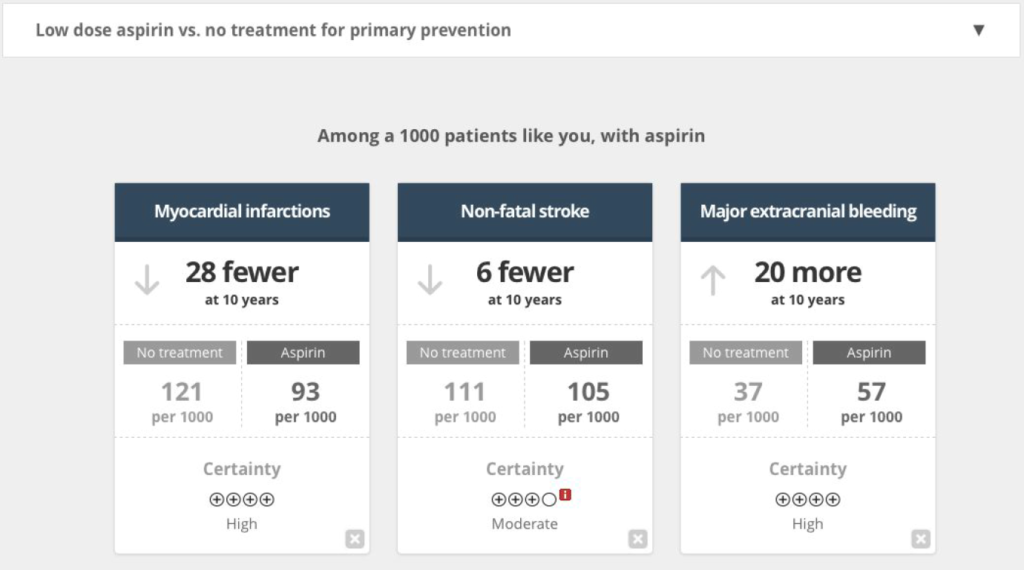
Decision aids are crucial to patient involvement and shared decision-making, whether applied to clinical interventions or self-management interventions. They potentially have a lasting impact on people´s life by providing unbiased information on alternative therapeutic of lifestyle choices. In COMPAR-EU we are currently reviewing the evidence on self-management interventions for Type 2 Diabetes, Obesity, Heart Failure and COPD. Based on the research, COMPAR-EU will develop decision aids, including patient decision aids, Interactive Summary of Findings tables and Evidence to Decision Frameworks. The overall aim is to build the foundation that these decision aids can be used by patients, clinicians, managers, HTA experts and industrial partners, such as IT developers. The question is, will our tools ever be implemented in practice?

Illustration of a decision aid from the MAGIC Project

Decision aids can improve decision-making processes without affecting consultation time. COMPAR-EU will help better understand system and patient level context factors that influence uptake and impact.

The effect of decision aids on consultation length

A major barrier to implementing decision aids is a clinician´s perception that it will extend his or her limited consultation time. In a recent systematic review, Dobler et al assess the evidence addressing this myth! Out of the 13 studies included in their review, in 9 consultation time was not significantly different in the group that used a decision aid compared to the group without. In three studies, consultation time was somewhat longer, while in one study the consultation time even decreased with the use of a decision aid. More importantly, in a study that evaluated why clinicians didn´t use a decision aid, 38.5% of clinicians said they didn´t use it for fear of extending consultation time.

The results of the review clearly don´t support the myth that decision aids extend the clinical encounter. However, what is true is that the effect of decision aids on consultation length is variable and may depend both on patient (such as health literacy level) and system level factors (such as quality of the decision aid or IT support for the decision aid). The research also shows that there are learning curves, with clinicians overcoming initial concerns after using decision aids and patients becoming more familiar with such tools, too. At the same time, arguably the quality of decision aids has improved in the last decade.

OGroene

Dr Oliver Groene

Dr Oliver Groene has a track record in conducting research on patient-centred care and promoting health care systems aligned with patients´ and citizens´ needs. In the COMPAR-EU project he acts as Innovation lead to ensure that the research can be successfully integrated into health care practice to the benefit of patients, clinicians and systems.

The myth is busted – decision aids do not extend consultation time!

However, we do need to continue to work closely with patients, clinicians, managers and IT companies to ensure that decision aids are used at the right time and for the right patient. Eventually, informed decisions are crucial to improve today´s health systems, in particular with regard to the challenge of managing chronic diseases and supporting patient´s self-management.

Go-Live of our Self-Management Blog

In June 2019, COMPAR-EU launched a Self-Management Blog that informs about developments in research, policy, and practice. Self-experience reports, interviews, guest articles, and more are published monthly. Beyond that, the COMPAR-EU team recommends monthly interesting scientific articles for reading.

The first blog article was designed by Jacqueline Bowman-Busato, a patient representative, who describes how she finally felt in control of her two chronic diseases. Read the full article “The importance of “self” and “management” in self-management of chronic diseases” on our blog.

You are interested in our recommended articles? Click “scientific article of the month“.

You wish to read more about a specific topic or have an idea for a new blogpost? Write us to contact@self-management.eu

Update of COMPAR-EU Data Management Plan

The Open Research Data Pilot aims to improve and maximise access to and re-use of research data generated by Horizon 2020 projects and takes into account the need to balance openness and protection of scientific information, commercialisation and Intellectual Property Rights (IPR), privacy concerns, security as well as data management and preservation questions.

Data Management Plans (DMP) are a key element of good data management. COMPAR-EU drafted a first version at the start of the project and describes how the data will be handled during and after the project, the types of research data that will be generated or collected during the project, the standards that will be used, how the research data will be preserved and what parts of the datasets will be shared for verification or reuse. This plan will be updated periodically. The first revision focused on improving the adaptation of the FAIR principles: making data findable, accessible, interoperable and re-usable. To this end we designed a new annex where detailed dataset descriptions can be shared, supported by example excerpts of the data and an electronic file with the database structure can be embedded.

Poster presentation on the development of COS

A lot of interested people were attracted by our COMPAR-EU poster on
“Prioritisation of patient-important outcomes in self-management interventions” (click on it to see it in full screen mode). One of our partner, OptiMedis AG, presented the development of the Core Outcome Sets (COS) at the 3rd symposium of a national network of health services researchers on 6th of May in Hamburg, Germany. The delegates were particularly interested in the process of patient involvement in our project. Obtaining patients´ unique perspectives and experiences ensures  that research is relevant to patients. Self-management interventions aim to reduce symptoms, minimise disability, and improve quality of life. To determine the effectiveness of such interventions, patients´ views on the importance of such outcomes need to be considered.

The main emphasis of the symposium was on the transfer from research into practice. Questions like “How does implementation succeed?” and “What are the barriers?” were discussed from an international perspective. Really relevant to OptiMedis as the work package leader of WP9: Dissemination, exploitation and development of business plans. In COMPAR-EU, OptiMedis investigates various business models for the decision aids implementation and explores how the research findings can be best translated into routine clinical practice.

4th European Health Literacy Conference 14th – 15th of March 2019

“Health literacy (…) is not just nice to have. It is a ‘must-have’, and we ‘must-invest’ in enhancing it.” (Claudia Stein, Director WHO)

“Building Health Literate Societies” was the overarching theme of this year´s European Health Literacy Conference on 14th and 15th of March 2019. The conference was hosted by the University College Dublin and Health Literacy Europe. The programme focused on how to advance research, policy and practice regarding people’s capacity to access, understand, appraise and apply health information to improve their health and quality of life. In addition, the role of health systems was highlighted in the quest of reducing inequality in health within societies.

Health literacy is a critical dimension of self-management that is often not properly addressed.

As part of COMPAR-EU, one of our PhD students from Nivel, Marieke van der Gaag, presented a poster about her PhD research plans (click on it to see it in full screen mode). With the title “Towards optimal self-management support for chronically ill with low health literacy levels”, she attracted lots of interested delegates to discuss on how patients with low health literacy skills can be optimally supported in the self-management of their chronic disease. As part of her PhD, she will analyse which (elements of) existing self-management interventions (SMIs) are especially relevant and effective for these patient groups.

Finalising the analysis plan

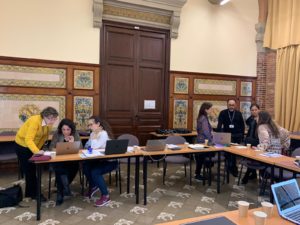
In a two-day meeting on 27th and 28th of February in Barcelona, NIVEL, IR-HSCSP, UOI and FAD finalised the last details of the COMPAR-EU analysis plan. In this meeting, we’ve advanced our plans on how to deal with complex interventions in network meta-analysis (NMA) and how to best balance the trade-off between describing interventions in detail and ensuring that our NMA has enough statistical power. The whole discussion was based on the perspective of the end users of our results, with the goal of adding value to the knowledge on self-management of patients, professionals, industry, researchers and decision-makers. With this end-goal in mind we also worked on the last details of the coordination of all partners, covering all key steps of the effectiveness analysis: the extraction of data, data cleaning, descriptive analysis, GRADE quality analysis, pair-wise comparisons and NMA.


First Advisory Board Meeting

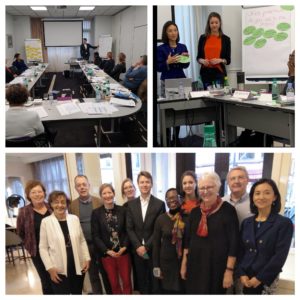
Our first COMPAR-EU Advisory Board meeting was a complete success! On 8th of February 2019 seven Advisory Board members came together with five COMPAR-EU team members in Paris. After giving an overview of the project and the progress to date, the exploitation of the project´s (expected) results was thoroughly discussed. Different stakeholder views were represented in the meeting: Patient, Clinician, Health Technology Assessment, Decision Aids and Patient Empowerment, Health System Innovation, Digital Health Investor, and Industry.

We appreciate all the valuable contributions helping to increase the project´s impact, the commitment of the members and the strong cooperation.

During the project timeframe of five years (till the end of 2022), the Advisory Board is expected to meet three times. In general, the Advisory Board advises the COMPAR-EU consortium on issues related to project goals and associated legal, ethical, and social issues. The members will play a key role in supporting the dissemination and exploitation of results.