Extensions of the probabilistic ranking metrics of competing treatments in network meta‐analysis to reflect clinically important relative differences on many outcomes

Self-management not only means to deal with the current condition, but also pursuing a holistic approach to mental and physical wellbeing. Self-management complements medical treatment to become more effective and successful. “Self-management has empowered me to better know and understand myself on so many levels” explains Jacqueline Bowman-Busato in her contribution.

For at least the past 23 years, I’ve been living with two complex chronic, relapsing diseases: Autoimmune Hashimoto’s and obesity. And yet, I can only say that it’s been the last 18 months where I have finally felt in control of my two diseases in any meaningful way. And this has been due to finally understanding and embracing responsible self-management.

Let me explain from a patient’s perspective. When I consciously started the journey of firstly realising that I had “a thyroid problem” which eventually was diagnosed as autoimmune hashimotos, I didn’t understand that a simple pill wasn’t enough to minimise symptoms. Critically, none of my medical specialists seemed to know or care about this fact either. The resultant search for energy in the wrong places aggravated my hashimotos symptoms (severe malabsorption of vitamin D and B as well as iron which all present as depression and severe anxiety). And all very quickly led to developing obesity. I never discussed obesity with my GP for 20 years (the average is 6 years according to a new study Action IO). I “dealt with it” by following holistic diets which always had a beginning, middle and very quick end!

Self-management has empowered me to better know and under-stand myself on so many levels.

It´s time to change

It was not until 18 months post bariatric surgery on 4 July 2016 that everything finally clicked into place for me. I realised that regardless of the good intentions of the public health environment, the sad fact of today’s chronic disease environment is medical treatment of physical manifestations rather than a holistic approach to mental as well as physical wellbeing, not to mention a lack of positive motivation to work together with health professionals in an empowering and empowered way.

Self-management has meant that I have had to take a very long and hard look at myself, the good, the bad and the very ugly truths in order to forge a personal pathway towards managing my life in such a way to optimise my mental health and wellbeing. Armed with my newly gained (and acknowledged) self-knowledge, I forged my own objectives-driven processes for achieving my goal of “mental clarity”. For me, brain fog has been my biggest barrier to sustainable management of both hashimotos and obesity. Having an objective of brain clarity rather than weight or specific blood values has meant that I’ve been able to take control of my health much more than if I solely relied on medication and then wondered why I was still malnourished to the point of continuing to seek energy in foods which are basically poison to me. Giving myself parameters with well-defined processes has significantly empowered me and raised my confidence levels to collaborate with my health care team. I am now listened to and heard.

Jacqueline_Bowman-Busato

Jacqueline Bowman-Busato

As a patient representative, Jacqueline has advised the Innovative Medicines Initiative (IMI) on patient engagement strategy, and provides expert advice to the European Commission on self-care policies. She works extensively on European as well as global projects bringing the key stakeholders together to build lasting consensus on global, regional and national levels.

Empowerment through self-management

Science very clearly states that obesity is a chronic relapsing disease. It‘s not the fault of one or other individual. In my world, that does not mean that I have to accept whatever medication I’m given in isolation. It means that I use the treatment (in my case the radical treatment of bariatric surgery) as a tool and I supplement with my own process for mental and physical wellbeing to put me on an even playing field to be able to optimise the medical treatment. Self-management empowers me to engage with the system and my health professionals. It allows me to give myself a bit of certainty which is not anxiety causing. It allows me to feel a partner in my own health. Self-management has empowered me to better know and understand myself on so many levels.

The role of general practitioner to empower patients in their self-management

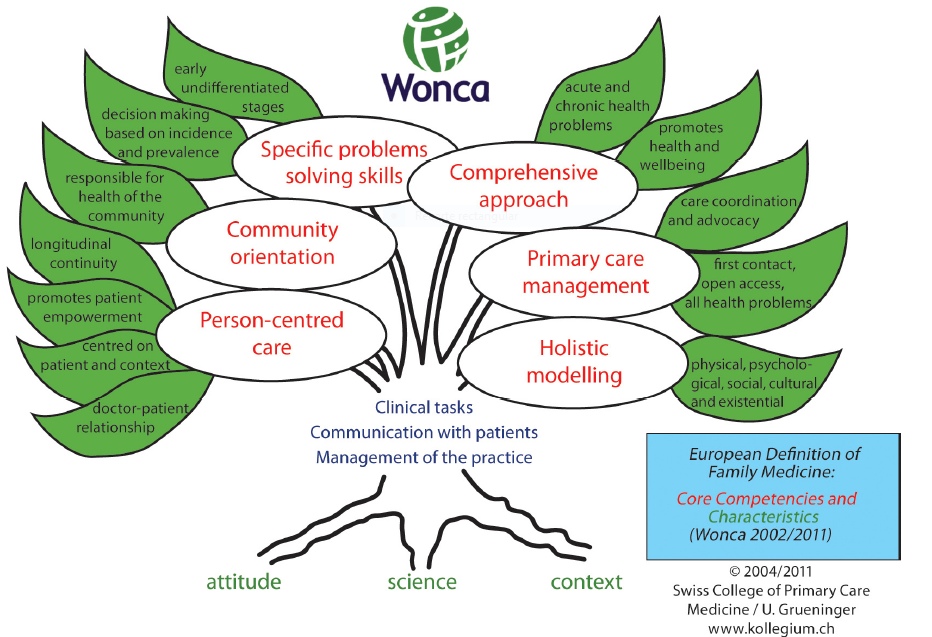
General practice is an academic and scientific specialisation with its own educational content, research, evidence base and clinical activity. It´s a clinical specialty that is based on primary care. The European definition of general practice by WONCA EUROPE (The European Society of General Practice/ Family Medicine) describes the key features of the discipline, and the role of the general practitioner (GP), as well as the core competencies of the GP. The features of our speciality include developing a patient-centred approach, orientated to individuals, their families and communities, and promoting patient empowerment.

For the past 25 years, I’ve been working as a GP in the Infanta Mercedes Primary Care Health Centre in Madrid, close to the Santiago Bernabeu Stadium of Real Madrid Football Club. To be honest, I don’t like football very much. As a GP, I deal with people and their problems in the context of their life circumstances. I don’t see them as the owners of impersonal pathologies or just “cases”. I think that the starting point of every health care process is the patient himself/herself. To understand the way a patient faces his/her health issue is as important as the dealing with the illness itself. Having been working for many years side by side with this patient’s dimension, my conclusion is that the common ground for all of us should be each person’s beliefs, fear, needs and expectations, in order to be not only more successful but also to perform better as humans.

The three key dimensions of patient empowerment are health literacy, self-care and shared decision-making.

Promoting patient empowerment in a primary care centre

Most of my patients lack self-care, that means they don’t know how to stick to life behaviours in favour of their own health in order to reach a well-being level that can be considered optimal. Another problem is having low health literacy, the degree to which people have the ability to obtain, process and understand basic information about their health and health services, in order to make appropriate decisions. Both are very important in people’s health.

As a GP I may be holding a strategic position when it comes to promote patient empowerment and self-management in my daily clinical practice. In my view, the starting points for a continuous educational process are both the multidisciplinary approach, the strong relationship based on a unique consultation process and the trust between the health care professional and the patient. That’s how we will be able to empower our patients, by knowing that the three key dimensions of patient empowerment are health literacy, self-care and shared decision-making.

Director of the Program of Preventive Activities and Health Promotion at the Spanish Society of Family and Community Medicine (semFY) & Professor of Family Medicine at Universidad Autonoma Madrid

Dr Francisco Camarelles Guillem

Francisco works as a General Practitioner in Madrid and he is interested in Preventive Activities and Health Promotion. He is a member of the Spanish Society of Family and Community Medicine (semFYC). semFYC is a featured member of WONCA EUROPE (The European Society of General Practice/ Family Medicine).

The challenges of shared decision-making and patient activation

Two main challenges I have to face in my daily business as a GP are the shared decision-making process and the patient “activation” procedure. As for the first one, when it comes to making decisions, it is crucial that the conversation between doctors and patients is as honest as possible, and that both parties realise they are involved into a thinking, feeling and discussing about a situation which will have consequences on both sides. On the other hand, activating my patients in they self-care is not so easy. Patient’s activation is related to knowledge, skills and confidence, so each one can manage his or her own health.

We know what strategies are used by health professionals who are good “activators” of the change in health behaviour of their patients. Mainly, there are five strategies which have been proven most successful in enabling patients to change their lifestyle: emphasizing patient responsibility, collaborating with patients, identifying small steps towards change, scheduling frequent follow-ups, and showing interest.

It is also interesting to know which less successful strategies are being used by other professionals. Highlighting those descriptions of the negative health outcomes to be expected if unhealthy behaviours are not faced: “If you do not stop drinking alcohol, your liver will end up having a cirrhosis disease.”

G-I-N & JBI Conference 2019

This year´s theme of the conference that was organised by the Guidelines International Network in partnership with the Joanna Briggs Institute (JBI) was “Trustworthy Evidence For Questions That Matter – The value of guidelines in 21st century healthcare”. It was an interesting event relevant to all healthcare professionals and anyone with an interest in addressing evidence-practice gaps by promoting best practice and improving the quality and safety of health care.

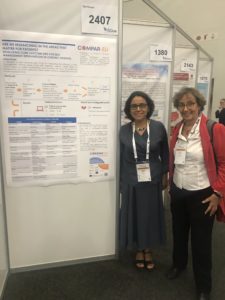
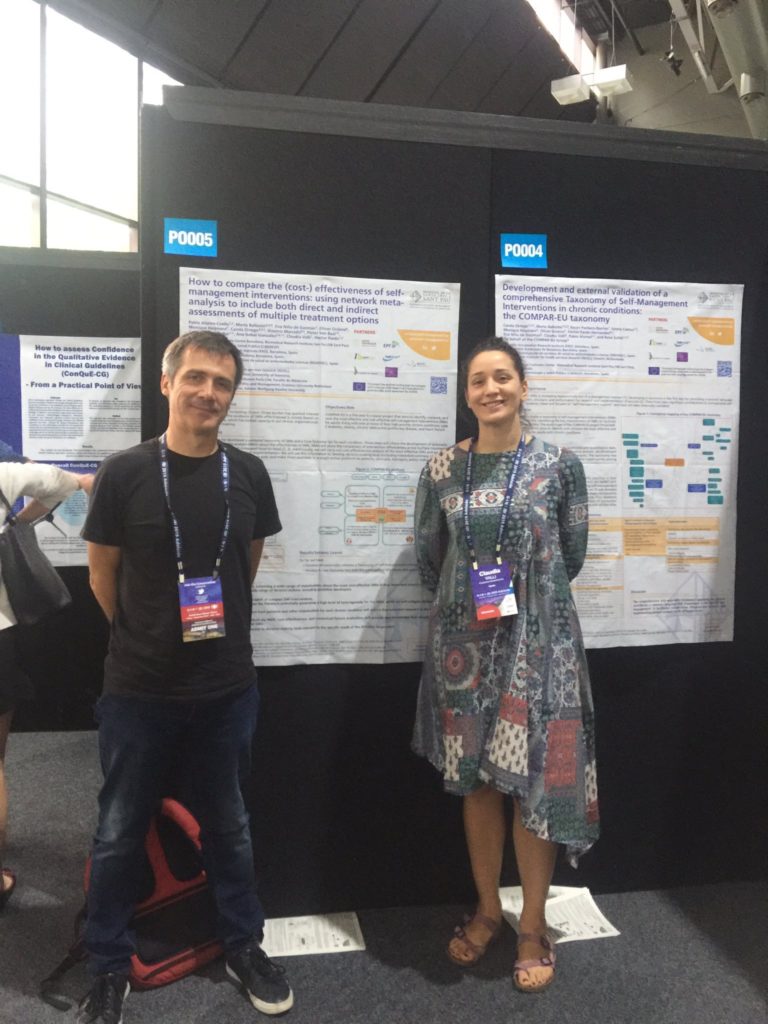
Our partner IR-HSCSP presented two posters:

  • How to compare the (cost-)effectiveness of self-management interventions: using network meta-analysis to include both direct and indirect assessments of multiple treatment options
  • Development and external validation of a comprehensive Taxonomy of self-management interventions in chronic onditions: the COMPAR-EU taxonomy.

ISQua´s 36th International Conference

The 36th International Conference of ISQua, the International Society for Quality in Health Care, took place from 20-23 October 2019 in Cape Town, South Africa. This year’s theme was “Innovate, Implement, Improve: Beating the Drum for Safety, Quality and Equity.”

Our partner FAD had two oral presentations!

Great effort by the whole consortium to disseminate the work carried out!

COMPAR-EU project and the importance of patient involvement

At EPF, we believe that meaningful patient involvement is a “must have” approach in research projects. Meaningful patient involvement implies that patients take an active role in activities that impact them and the patient community in general. Their hands-on knowledge and personal experience are very valuable for the process that needs to be considered.  For effective and meaningful patient involvement it is crucial to establish partnerships on equal terms among patient organisations, health professionals, carers’ association, industry, insurers, health managers, and authorities.

Patients´ experiential knowledge is valued: they are seen as genuine partners rather than “validators” and “approvers” of research results. Meaningful patient involvement is planned well in advance, “built-in” to the design, resourced, and its impact is beneficial to all project participants. Patients should not be used as a last resort: they should be involved from the very beginning and kept informed during the follow-up stages. Here is how we are striving to achieve this in COMPAR-EU in a nutshell.

Patient involvement is of key importance when designing the final product of the project – the COMPAR-EU Interactive Platform!

How is meaningful patient involvement incorporated into the project?

This year, EPF initiated the process of identifying, summarizing and ‘translating’ key outputs produced within the project in order to adjust them and make them accessible and understandable for the patient community. This process is formally known as ‘adaptation’. To do this, EPF decided to set up a group of patients (a ‘patient panel’) that will be involved during the full duration of the project and take an active part in all stages of this adaptation process. The patient panel meets once a month (online teleconferences) and is a substantial asset to EPF’s work in the project. The way we selected the participants in the patient panel was mainly through our membership and our Youth Group. We also reached out to attendees in the Core Outcome Sets Consensus Building Workshop that took place in Berlin last year. As always, to capture all possible perspectives, we try to balance when it comes to country, background, chronic condition and scientific knowledge/expertise. During these webinars, valuable knowledge and ideas are exchanged among members that bring additional level of depth and tangibility to what is conducted in the project. Members of the patient panel not only question the methods used when developing the projects’ products, but also are actively involved in what follows next and, in the design, and implementation phases of COMPAR-EU.

Ninov_Lyudmil

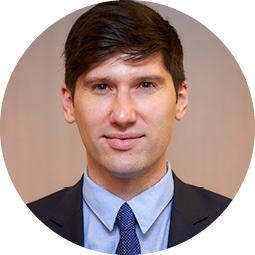
Lyudmil Ninov

As EPF´s Project Officer and EPF´s Youth Group Coordinator, Lyudmil Ninov is responsible for different EU research projects.

In COMPAR-EU, Lyudmil and his team at EPF ensure that patients´ views, gender and socio-economic dimensions are considered throughout the whole project.

What is planned in the future?

In 2020, EPF has planned very exciting activities, including (but not limited to): two face-to-face meetings of the patient panel, the production of lay summaries focused on what has been conducted by the project so far and re-occurring online webinars. During these webinars, creative ideas flow in the air and members of the panel can truly shape the way the final project product will look like. We plan to expand the patient panel as we would like to diversify the group of patients and patient representatives involved. If you are interested in joining – please get back to us – there are still available places!

After we have designed our first draft of the COMPAR-EU Platform, there will be dedicated sessions on the functionality and usability together with actual testing face-to-face meetings. All these activities will bring even more patient centeredness to COMPAR-EU and showcase the direct benefits of patient involvement.

Social network influences and the adoption of obesity-related behaviours in adults: a critical interpretative synthesis review

Self-management not only means to deal with the current condition, but also pursuing a holistic approach to mental and physical wellbeing. Self-management complements medical treatment to become more effective and successful. “Self-management has empowered me to better know and understand myself on so many levels” explains Jacqueline Bowman-Busato in her contribution.

For at least the past 23 years, I’ve been living with two complex chronic, relapsing diseases: Autoimmune Hashimoto’s and obesity. And yet, I can only say that it’s been the last 18 months where I have finally felt in control of my two diseases in any meaningful way. And this has been due to finally understanding and embracing responsible self-management.

Let me explain from a patient’s perspective. When I consciously started the journey of firstly realising that I had “a thyroid problem” which eventually was diagnosed as autoimmune hashimotos, I didn’t understand that a simple pill wasn’t enough to minimise symptoms. Critically, none of my medical specialists seemed to know or care about this fact either. The resultant search for energy in the wrong places aggravated my hashimotos symptoms (severe malabsorption of vitamin D and B as well as iron which all present as depression and severe anxiety). And all very quickly led to developing obesity. I never discussed obesity with my GP for 20 years (the average is 6 years according to a new study Action IO). I “dealt with it” by following holistic diets which always had a beginning, middle and very quick end!

Self-management has empowered me to better know and under-stand myself on so many levels.

It´s time to change

It was not until 18 months post bariatric surgery on 4 July 2016 that everything finally clicked into place for me. I realised that regardless of the good intentions of the public health environment, the sad fact of today’s chronic disease environment is medical treatment of physical manifestations rather than a holistic approach to mental as well as physical wellbeing, not to mention a lack of positive motivation to work together with health professionals in an empowering and empowered way.

Self-management has meant that I have had to take a very long and hard look at myself, the good, the bad and the very ugly truths in order to forge a personal pathway towards managing my life in such a way to optimise my mental health and wellbeing. Armed with my newly gained (and acknowledged) self-knowledge, I forged my own objectives-driven processes for achieving my goal of “mental clarity”. For me, brain fog has been my biggest barrier to sustainable management of both hashimotos and obesity. Having an objective of brain clarity rather than weight or specific blood values has meant that I’ve been able to take control of my health much more than if I solely relied on medication and then wondered why I was still malnourished to the point of continuing to seek energy in foods which are basically poison to me. Giving myself parameters with well-defined processes has significantly empowered me and raised my confidence levels to collaborate with my health care team. I am now listened to and heard.

Jacqueline_Bowman-Busato

Jacqueline Bowman-Busato

As a patient representative, Jacqueline has advised the Innovative Medicines Initiative (IMI) on patient engagement strategy, and provides expert advice to the European Commission on self-care policies. She works extensively on European as well as global projects bringing the key stakeholders together to build lasting consensus on global, regional and national levels.

Empowerment through self-management

Science very clearly states that obesity is a chronic relapsing disease. It‘s not the fault of one or other individual. In my world, that does not mean that I have to accept whatever medication I’m given in isolation. It means that I use the treatment (in my case the radical treatment of bariatric surgery) as a tool and I supplement with my own process for mental and physical wellbeing to put me on an even playing field to be able to optimise the medical treatment. Self-management empowers me to engage with the system and my health professionals. It allows me to give myself a bit of certainty which is not anxiety causing. It allows me to feel a partner in my own health. Self-management has empowered me to better know and understand myself on so many levels.

2nd Consortium Meeting in Ioannina, Greece

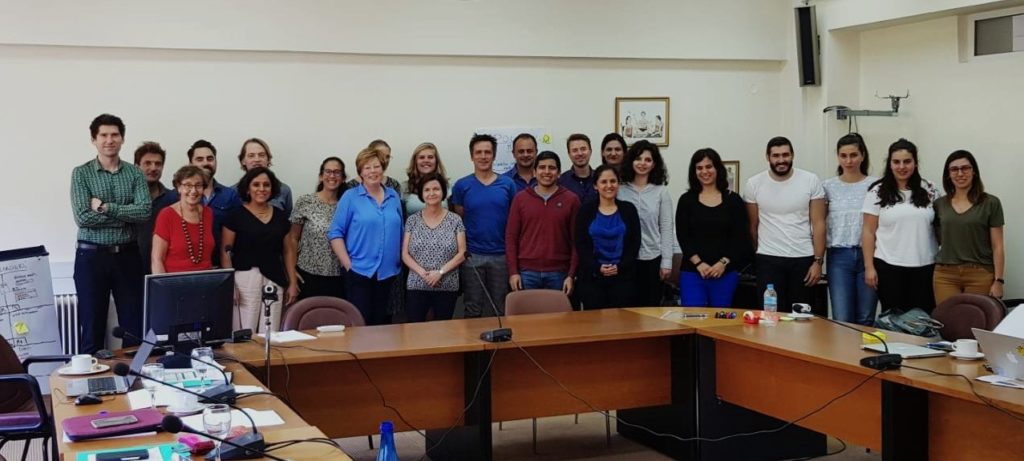
There is always good collaboration and exchange between all COMPAR-EU partners at different stages. In addition to work package-specific meetings in which involved partners participate, all consortium partners meet once a year. This year, our second consortium meeting took place on 30th of September and 1st of October 2019 in Ioannina, Greece. UOI hosted this event. The two full working days with discussions on the status of the project development were very fruitful. The extraction process for the first disease (Diabetes Mellitus Type 2) has been largely completed and network meta-analyses of the effectiveness of self-management interventions can begin. We are also starting to develop our final product, the COMPAR-EU platform featuring decision aids. Consortium meetings are very crucial as they foster interactive group discussion and drive our work forward.

Criteria for Judging the Quality of Patient Decision Aids

Self-management not only means to deal with the current condition, but also pursuing a holistic approach to mental and physical wellbeing. Self-management complements medical treatment to become more effective and successful. “Self-management has empowered me to better know and understand myself on so many levels” explains Jacqueline Bowman-Busato in her contribution.

For at least the past 23 years, I’ve been living with two complex chronic, relapsing diseases: Autoimmune Hashimoto’s and obesity. And yet, I can only say that it’s been the last 18 months where I have finally felt in control of my two diseases in any meaningful way. And this has been due to finally understanding and embracing responsible self-management.

Let me explain from a patient’s perspective. When I consciously started the journey of firstly realising that I had “a thyroid problem” which eventually was diagnosed as autoimmune hashimotos, I didn’t understand that a simple pill wasn’t enough to minimise symptoms. Critically, none of my medical specialists seemed to know or care about this fact either. The resultant search for energy in the wrong places aggravated my hashimotos symptoms (severe malabsorption of vitamin D and B as well as iron which all present as depression and severe anxiety). And all very quickly led to developing obesity. I never discussed obesity with my GP for 20 years (the average is 6 years according to a new study Action IO). I “dealt with it” by following holistic diets which always had a beginning, middle and very quick end!

Self-management has empowered me to better know and under-stand myself on so many levels.

It´s time to change

It was not until 18 months post bariatric surgery on 4 July 2016 that everything finally clicked into place for me. I realised that regardless of the good intentions of the public health environment, the sad fact of today’s chronic disease environment is medical treatment of physical manifestations rather than a holistic approach to mental as well as physical wellbeing, not to mention a lack of positive motivation to work together with health professionals in an empowering and empowered way.

Self-management has meant that I have had to take a very long and hard look at myself, the good, the bad and the very ugly truths in order to forge a personal pathway towards managing my life in such a way to optimise my mental health and wellbeing. Armed with my newly gained (and acknowledged) self-knowledge, I forged my own objectives-driven processes for achieving my goal of “mental clarity”. For me, brain fog has been my biggest barrier to sustainable management of both hashimotos and obesity. Having an objective of brain clarity rather than weight or specific blood values has meant that I’ve been able to take control of my health much more than if I solely relied on medication and then wondered why I was still malnourished to the point of continuing to seek energy in foods which are basically poison to me. Giving myself parameters with well-defined processes has significantly empowered me and raised my confidence levels to collaborate with my health care team. I am now listened to and heard.

Jacqueline_Bowman-Busato

Jacqueline Bowman-Busato

As a patient representative, Jacqueline has advised the Innovative Medicines Initiative (IMI) on patient engagement strategy, and provides expert advice to the European Commission on self-care policies. She works extensively on European as well as global projects bringing the key stakeholders together to build lasting consensus on global, regional and national levels.

Empowerment through self-management

Science very clearly states that obesity is a chronic relapsing disease. It‘s not the fault of one or other individual. In my world, that does not mean that I have to accept whatever medication I’m given in isolation. It means that I use the treatment (in my case the radical treatment of bariatric surgery) as a tool and I supplement with my own process for mental and physical wellbeing to put me on an even playing field to be able to optimise the medical treatment. Self-management empowers me to engage with the system and my health professionals. It allows me to give myself a bit of certainty which is not anxiety causing. It allows me to feel a partner in my own health. Self-management has empowered me to better know and understand myself on so many levels.
Testing and implementing self-management programs: new approaches needed in Health Technology Assessment and Health Policy

Self-management programs and tools put our traditional way of evaluation and decision-making to a challenge. The traditional research and policy models usually use the example of relatively straightforward interventions, like drugs, to illustrate the importance and practice of what they do. But how must new research techniques look like to meet current challenges?

Old school HTA models offer a simple match of evaluation and decision-making. During the last two decades, however, it appeared that one size doesn’t fit all; usual techniques in research and policy don’t fit anything at all. The HTA (health technology assessment) community encounters all sort of problems due to all sort of complexities and reacted on those challenges inventively, by developing and testing new research techniques and new modes of interaction with policy and practice. How do these challenges look like? And how did researchers and policy makers react? The key word is: interaction. And interaction is easier said than done. It requires a new attitude of all parties in the Health Care arena.

It starts with attitudes, and the only one who can do this is: me. For anyone counts: it starts with me.

Reality puts the rational model of Health Technology Assessment to a challenge

For those interested in policy science: HTA (Health Technology Assessment) once was a typical example of the rational policy model. You start with formulating decision criteria for coverage decisions (like safety, effectiveness, cost-effectiveness); you perform some dedicated research (assessments of the technology) to answer the questions raised by your criteria, and you end up with clear-cut yes-or-no decisions, totally guided by the results of your assessment. However, reality puts the rational model to a challenge, in every aspect. To mention some interesting problems: how do we define which sort of effects are essential to patients, to doctors, to the community (which pays for it)? What to choose in case of divergence? Is there a universal, generally accepted measure and threshold for quality of life aspects? What about cost: what types of cost are to be reckoned with and is there a maximum for cost? May be… also a minimum, are certain technologies too cheap to cover, or do they really meet the definition of health care? How do we involve all relevant parties in the arena, to start with patients, but also industry, taxpayers, health care professionals; and how do we integrate the different perspectives and interests of all those involved? Do we get our study results in due time? What to do if not: conditional reimbursement? And finally: how to evaluate complex, composed programs and how do we account for quick developments in the technology itself, and in the way professionals and patients behave and learn? Can we really ascribe effects to specific elements of the program (devices, communication, user capacities)?

eigen foto

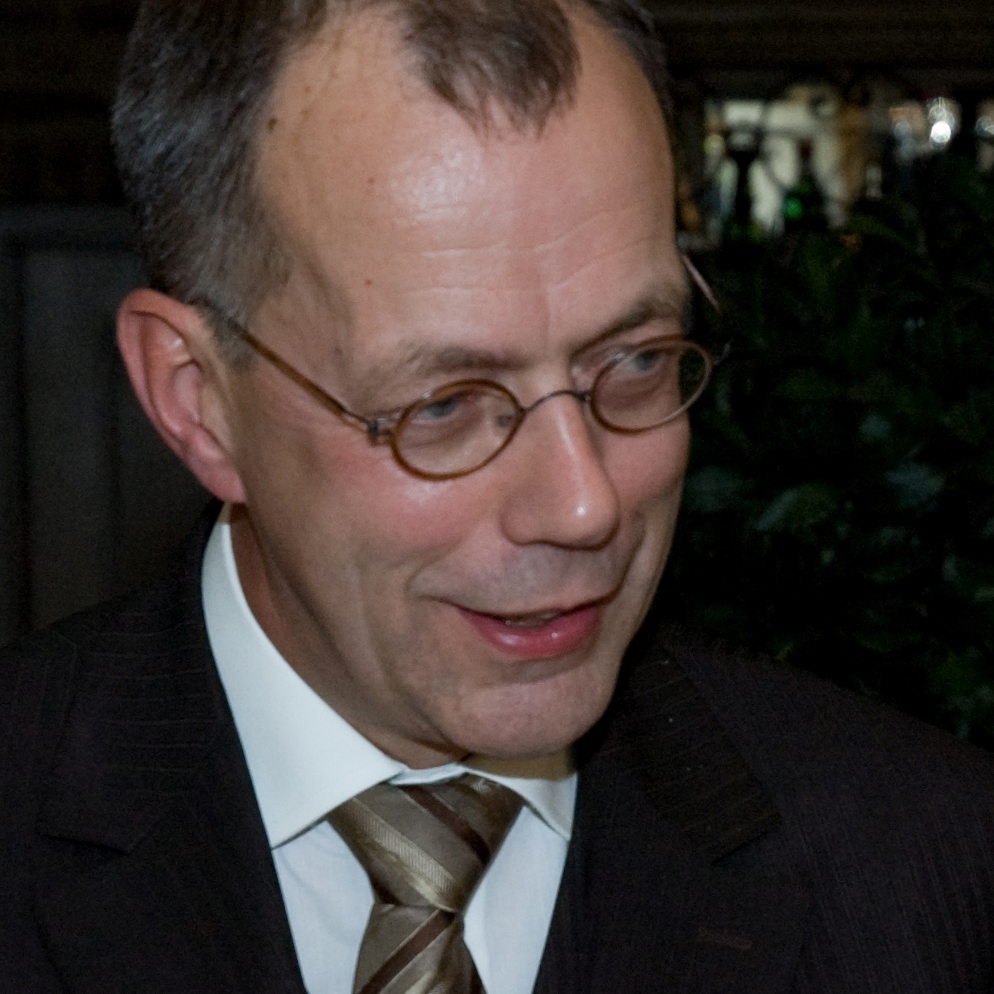
Dr Bert Boer

Dr Bert Boer is a Professor Emeritus in Policy and Research for Health Care Coverage, Erasmus University, Rotterdam. He investigates and teaches contents, procedures, criteria, policy implications of Health Care coverage decisions. Until 2015 he was Executive Member of the Board of the National Health Care Institute in the Netherlands.

Interactivity requires new attitudes

I have a strong conviction: all parties involved have to look out of their own window (be aware of their specific view on things) into the garden (knowledge, interests, values) of the other ones, ask questions and listen to the answers with an open mind. Interactivity is needed between patients and doctors, professionals and policy makers, researchers and HC providers, patients and taxpayers. Surely, we need new policy instruments and regulations, we need new research techniques, we need new organisational skills of professionals and providers, but all that won’t help if we do not learn, listen, leave our silos and bubbles: it starts with attitudes, and the only one who can do this is: me. For anyone counts: it starts with me.

Therefore, it seems that if we want to take advantage of the potential benefits and advantages of apps for self-management, we need to tailor those apps to the circumstances of the people using them. And there is still much to learn on the specific circumstances in which the self-management apps work best and how to sustain it overtime. COMPAR-EU aims to contribute in this area by performing sub-group analysis on the effectiveness of app-based self-management interventions to help identify precisely those areas of success, contributing to expand them across Europe.

Moving Measurement into Action: Designing Global Principles for Measuring Patient Safety

Today, 5th of September, a new Salzburg Global Seminar program “Moving Measurement into Action: Designing Global Principles for Measuring Patient Safety” begins. Around 50 health care leaders from across the world will convene in Salzburg to help design global principles for measuring patient safety. The program is held in partnership with the Institute for Healthcare Improvement (IHI) and is part of Salzburg Global’s Health and Health Care Innovation multi-year series. Additional support comes from the Gordon and Betty Moore Foundation and the Mexican Business Council Fellowship Program. Researchers, design thinkers, patients, providers, and experts in measurement and patient-safety will develop an actionable, cross-continuum framework for safety measurement.

Read the full preview