The integration of patients’ perspectives in self-management interventions research: why and how?

Evidence-Based Medicine (EBM) is the integration of best research evidence with clinical expertise and patient values. Since its first definition, there has been an increasing emphasis on the limitations of using evidence alone to make decisions, and the importance of the values and preference. In healthcare decision making, values and preferences refer to the internal processes that individuals use when balancing potential benefits and harms derived from treatment.

In COMPAR-EU, our focus will be to summarise how patients value the importance of outcomes and the factors that might influence achieving the expected goals of self-management interventions.

Patients’ values and preferences and decision-making
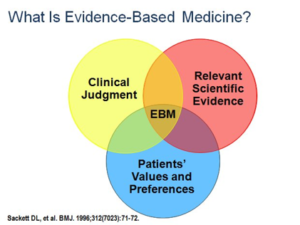
The integration of patients’ values and preferences can be considered an ethical mandate since patients are affected by the different healthcare decisions, including clinical recommendations. From a policymaker perspective, the evidence informing about patients’ values and preferences can help to delineate more patient-centred programs; and from a healthcare practitioner perspective, this evidence can help the process of decision-making  in clinical encounters.

Patients’ preferences are the result of experiences, expectations and attitudes towards health and disease. Evidence informing values and preferences is particularly critical in scenarios with scarce or low certainty of the evidence of effects; when it is necessary to make explicit these usually invisible aspects. There are diverse methods to obtain patients’ values and preferences, and these include both quantitative and qualitative research.

Ena_Niño_de_Guzman

Ena Niño de Guzman

As a healthcare researcher, Ena is part of the Sant Pau team of COMPAR-EU. She leads the development of the work that will inform about the patient perspective throughout the project. Her PhD project is based on this work. She was recently awarded a Rio Hortega investigator contract by the Instituto de Salud Carlos III (Spanish Ministry of Health).

The patient perspective in self-management interventions
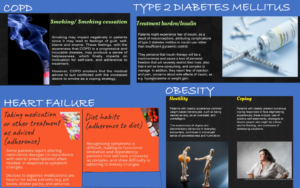
figure2The COMPAR-EU project aims to identify the most effective and cost-effective self-management (SM) interventions for patients living with one of four high priority chronic conditions (type-2 diabetes mellitus (T2DM), obesity, heart failure, and chronic obstructive pulmonary disease (COPD)).

As part of COMPAR-EU, we have conducted a scoping review of quantitative and qualitative reviews to explore values and preferences of patients regarding the role of self-management in these conditions. This work was part of the development process of four Core Outcome Sets (COS), defined as a standardised collection of outcomes which should be measured and reported at a minimum in all trials of a specific condition or a trial population. The objective was to identify which outcomes emerged from the available published research evidence. We analysed the main findings of selected reviews and identified common themes related with potential outcomes of interest when dealing with SM interventions, and developed infographics to facilitate the discussion between patients, caregivers, and researchers participating in the consensus workshop of the selection of the COS.

In COMPAR-EU we are now conducting four overviews of reviews of studies exploring patients’ values and preferences, to collect and summarise the patients’ perspectives with one of these four chronic conditions regarding SM interventions. In these overviews, our focus will be to summarise how patients value the importance of outcomes, and the factors that might influence achieving the expected goals of SM interventions. We will provide summaries of findings to inform the different decision-making tools that will be developed in COMPAR-EU. More specifically, we will explore the extent of the certainty and variability in how patients value the importance of outcomes. We will also obtain relevant information regarding contextual factors that have an impact on the acceptability and feasibility of SM interventions. Some of these findings will help to delineate implementation strategies for SM interventions.
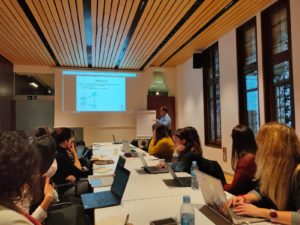

Two-days workshop on NMA

During the 17th and 18th of February, a 2-days workshop on advanced methods for network meta-analysis (NMA) took place in Barcelona. We had theoretical and practical sessions on R Studio, including a fruitful discussion on the additive model for NMA and its implementation in the COMPAR-EU project. Thanks to Dimitris Mavridis from UOI for the stimulating lectures, and to Iberoamerican Cochrane Center and FAD for the organization.


Lifetime Medical Costs of Obesity: Prevention No Cure for Increasing Health Expenditure

Self-management not only means to deal with the current condition, but also pursuing a holistic approach to mental and physical wellbeing. Self-management complements medical treatment to become more effective and successful. “Self-management has empowered me to better know and understand myself on so many levels” explains Jacqueline Bowman-Busato in her contribution.

For at least the past 23 years, I’ve been living with two complex chronic, relapsing diseases: Autoimmune Hashimoto’s and obesity. And yet, I can only say that it’s been the last 18 months where I have finally felt in control of my two diseases in any meaningful way. And this has been due to finally understanding and embracing responsible self-management.

Let me explain from a patient’s perspective. When I consciously started the journey of firstly realising that I had “a thyroid problem” which eventually was diagnosed as autoimmune hashimotos, I didn’t understand that a simple pill wasn’t enough to minimise symptoms. Critically, none of my medical specialists seemed to know or care about this fact either. The resultant search for energy in the wrong places aggravated my hashimotos symptoms (severe malabsorption of vitamin D and B as well as iron which all present as depression and severe anxiety). And all very quickly led to developing obesity. I never discussed obesity with my GP for 20 years (the average is 6 years according to a new study Action IO). I “dealt with it” by following holistic diets which always had a beginning, middle and very quick end!

Self-management has empowered me to better know and under-stand myself on so many levels.

It´s time to change

It was not until 18 months post bariatric surgery on 4 July 2016 that everything finally clicked into place for me. I realised that regardless of the good intentions of the public health environment, the sad fact of today’s chronic disease environment is medical treatment of physical manifestations rather than a holistic approach to mental as well as physical wellbeing, not to mention a lack of positive motivation to work together with health professionals in an empowering and empowered way.

Self-management has meant that I have had to take a very long and hard look at myself, the good, the bad and the very ugly truths in order to forge a personal pathway towards managing my life in such a way to optimise my mental health and wellbeing. Armed with my newly gained (and acknowledged) self-knowledge, I forged my own objectives-driven processes for achieving my goal of “mental clarity”. For me, brain fog has been my biggest barrier to sustainable management of both hashimotos and obesity. Having an objective of brain clarity rather than weight or specific blood values has meant that I’ve been able to take control of my health much more than if I solely relied on medication and then wondered why I was still malnourished to the point of continuing to seek energy in foods which are basically poison to me. Giving myself parameters with well-defined processes has significantly empowered me and raised my confidence levels to collaborate with my health care team. I am now listened to and heard.

Jacqueline_Bowman-Busato

Jacqueline Bowman-Busato

As a patient representative, Jacqueline has advised the Innovative Medicines Initiative (IMI) on patient engagement strategy, and provides expert advice to the European Commission on self-care policies. She works extensively on European as well as global projects bringing the key stakeholders together to build lasting consensus on global, regional and national levels.

Empowerment through self-management

Science very clearly states that obesity is a chronic relapsing disease. It‘s not the fault of one or other individual. In my world, that does not mean that I have to accept whatever medication I’m given in isolation. It means that I use the treatment (in my case the radical treatment of bariatric surgery) as a tool and I supplement with my own process for mental and physical wellbeing to put me on an even playing field to be able to optimise the medical treatment. Self-management empowers me to engage with the system and my health professionals. It allows me to give myself a bit of certainty which is not anxiety causing. It allows me to feel a partner in my own health. Self-management has empowered me to better know and understand myself on so many levels.

Making Europe Health Literate by 2025 – Seven Actions to Promote Health Literacy and Self-Care in the Digital Era

Self-management not only means to deal with the current condition, but also pursuing a holistic approach to mental and physical wellbeing. Self-management complements medical treatment to become more effective and successful. “Self-management has empowered me to better know and understand myself on so many levels” explains Jacqueline Bowman-Busato in her contribution.

For at least the past 23 years, I’ve been living with two complex chronic, relapsing diseases: Autoimmune Hashimoto’s and obesity. And yet, I can only say that it’s been the last 18 months where I have finally felt in control of my two diseases in any meaningful way. And this has been due to finally understanding and embracing responsible self-management.

Let me explain from a patient’s perspective. When I consciously started the journey of firstly realising that I had “a thyroid problem” which eventually was diagnosed as autoimmune hashimotos, I didn’t understand that a simple pill wasn’t enough to minimise symptoms. Critically, none of my medical specialists seemed to know or care about this fact either. The resultant search for energy in the wrong places aggravated my hashimotos symptoms (severe malabsorption of vitamin D and B as well as iron which all present as depression and severe anxiety). And all very quickly led to developing obesity. I never discussed obesity with my GP for 20 years (the average is 6 years according to a new study Action IO). I “dealt with it” by following holistic diets which always had a beginning, middle and very quick end!

Self-management has empowered me to better know and under-stand myself on so many levels.

It´s time to change

It was not until 18 months post bariatric surgery on 4 July 2016 that everything finally clicked into place for me. I realised that regardless of the good intentions of the public health environment, the sad fact of today’s chronic disease environment is medical treatment of physical manifestations rather than a holistic approach to mental as well as physical wellbeing, not to mention a lack of positive motivation to work together with health professionals in an empowering and empowered way.

Self-management has meant that I have had to take a very long and hard look at myself, the good, the bad and the very ugly truths in order to forge a personal pathway towards managing my life in such a way to optimise my mental health and wellbeing. Armed with my newly gained (and acknowledged) self-knowledge, I forged my own objectives-driven processes for achieving my goal of “mental clarity”. For me, brain fog has been my biggest barrier to sustainable management of both hashimotos and obesity. Having an objective of brain clarity rather than weight or specific blood values has meant that I’ve been able to take control of my health much more than if I solely relied on medication and then wondered why I was still malnourished to the point of continuing to seek energy in foods which are basically poison to me. Giving myself parameters with well-defined processes has significantly empowered me and raised my confidence levels to collaborate with my health care team. I am now listened to and heard.

Jacqueline_Bowman-Busato

Jacqueline Bowman-Busato

As a patient representative, Jacqueline has advised the Innovative Medicines Initiative (IMI) on patient engagement strategy, and provides expert advice to the European Commission on self-care policies. She works extensively on European as well as global projects bringing the key stakeholders together to build lasting consensus on global, regional and national levels.

Empowerment through self-management

Science very clearly states that obesity is a chronic relapsing disease. It‘s not the fault of one or other individual. In my world, that does not mean that I have to accept whatever medication I’m given in isolation. It means that I use the treatment (in my case the radical treatment of bariatric surgery) as a tool and I supplement with my own process for mental and physical wellbeing to put me on an even playing field to be able to optimise the medical treatment. Self-management empowers me to engage with the system and my health professionals. It allows me to give myself a bit of certainty which is not anxiety causing. It allows me to feel a partner in my own health. Self-management has empowered me to better know and understand myself on so many levels.

Challenges in assessing the evidence from trials comparing multiple self-management interventions

There are plenty of trials evaluating the effectiveness of self-management interventions (SMIs). A systematic review can summarise the current evidence. SMIs are complex, comprising several, possibly interacting, components. The main questions are: Do SMIs work in general? If so, which interventions? And which characteristics of these interventions? Network meta-analyses (NMA) help to answer such questions.

NMA is an increasingly popular method for synthesizing results from studies including more than two interventions. It allows us to estimate the relative effectiveness between interventions even if those have never been compared directly.

In the COMPAR-EU project we have identified hundreds of trials that evaluate SMIs. Such extensive evidence would make any statistician burst with excitement! I was quickly brought up to reality when I realized the nature of SMIs. These interventions are said to be complex, and for good reason! Our COMPAR-EU taxonomy identifies eight distinct categories associated with SMIs and 43 characteristics assigned to them. The categories are: support techniques, type of encounter, mode, time of communication, recipient, type of provider, location and intensity. There is a total of 72,576 different combinations of characteristics! We end up with more effects to be estimated than the data points used, and each trial compares a unique SMI. Hence, some theory-driven grouping of characteristics is necessary.

Disentangling the effect of each SMI component and examine its interactions lie in the core of understanding what really works in SMIs.

Disentangling the effect of each component

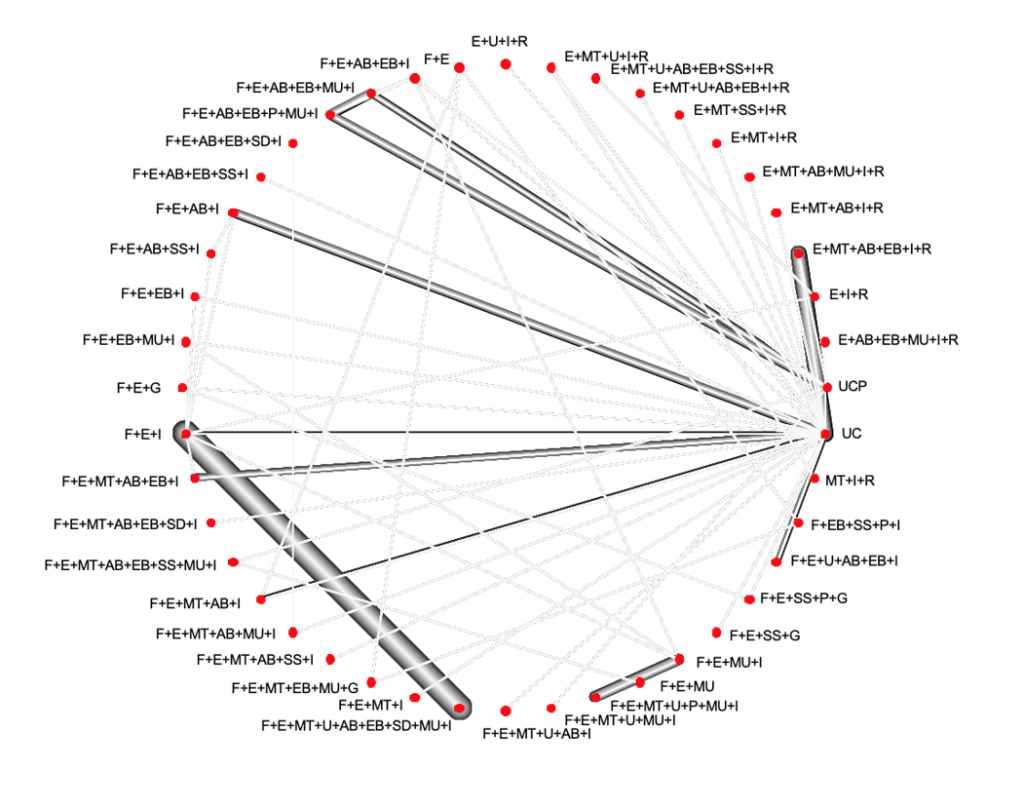
Statistics is all about uncertainty and assumptions. Variation of SMIs across trials give us information on both the components that work, and those did not. One should also think of the interactions among these characteristics e.g. a SMI may work if it includes coaching and social support (support techniques), given face-to-face (mode) by a physician (provider) but may not work if provided by a lay-person or remotely. Hence, on one hand, variation of SMIs is informative but on the other hand, with all these components, it is not straightforward how to disentangle the effect of each component and explore interactions. In COMPAR-EU, we focus on four chronic diseases (diabetes, obesity, heart failure and COPD). In the case of diabetes, there are 508 studies evaluating 209 distinct interventions for glycated haemoglobin and this happened after having grouped characteristics, from 43 down to 15! The network plot, consisting of nodes (interventions) and edges (direct evidence from studies) is chaotic! This is why we present here the network plot for an outcome (adherence) with far less studies (56).

This network plot shows which interventions are compared. Nodes represent SMIs and the edges between the nodes represent comparisons that have been evaluated in the included RCTs. The thickness of the edges is proportional to the number of participants randomized to the respective comparison.

Dimitris

Dr Dimitris Mavridis

Dimitris has been involved in evidence synthesis for a decade now. He acts as a reviewer both for the Cochrane and the Campbell collaborations. He also serves as an associate editor for ‘Research Synthesis Methods’ and the series ‘statistics in practice’ in the ‘Evidence Based Mental Health’ journal. He has published many NMA and has been working mainly on statistical methodology surrounding NMA.

The definition of `usual care´ is crucial

So, what are we assuming when employing NMA? Consider we have studies comparing A and B, and studies comparing A and C. These two types of studies can inform the relative effectiveness between B and C, indirectly through A. That implies that A vs. B and A vs. C studies should be similar in terms of the distribution of each characteristic that may affect the effectiveness of the SMIs. This needs to be extended to the whole network plot. If not, there is a risk of confounding. It also means that interventions should be similarly defined across different studies. The control group is typically what is called ‘usual care’. That reflects the standard self-management of a patient with as little as possible involvement of the researcher. There is large variation in the definition of usual care across studies and this has implications not only for the interpretation of results but also for the NMA assumptions. Is the usual care the same when it includes just sharing information and when it includes other support techniques such as provision of equipment or skills training? Different “usual cares” may confound results and its definition is crucial since, as seen in the network plot, most SMIs are compared to usual care. There are further assumptions about estimating the effect of each component. The simplest, additive model assumes that the effect of a combination of components equals the sum of the individual effects. For example, the effect of a SMI that includes education, given face-to-face at an individual level (E+F+I) equals the sum of the effects of education (E), face-to-face (F) and individual (I). In practice, it could be the case, as Aristotle said, that ‘The whole is greater than the sum of its parts”. Two components may not work individually but when they are put together, they might work or have an effect larger than the sum of individual effects. It could also be the opposite, they may work antagonistically.

Generally, there are many challenges when evaluating component effects. Although relevant methodology is rapidly increasing, it is far from being considered established. With such complexity we need to separate noise from true information and this is not straightforward. The statistical literature has not succeeded in answering all the important questions regarding complex interventions and the answers we have found have raised further questions, but I would say, we are puzzled now at a higher level and about more important things.

Publication of the COMPAR-EU protocol

Our protocol paper is now published at BMJ. You would like to know how patients are included in the project and how our analyses, the Network Meta-analysis, the cost-effectiveness analysis, and the contextual analysis, look like? Read our protocol paper online at BMI.

Obesity prevention and the role of hospital and community-based health services: a scoping review

Self-management not only means to deal with the current condition, but also pursuing a holistic approach to mental and physical wellbeing. Self-management complements medical treatment to become more effective and successful. “Self-management has empowered me to better know and understand myself on so many levels” explains Jacqueline Bowman-Busato in her contribution.

For at least the past 23 years, I’ve been living with two complex chronic, relapsing diseases: Autoimmune Hashimoto’s and obesity. And yet, I can only say that it’s been the last 18 months where I have finally felt in control of my two diseases in any meaningful way. And this has been due to finally understanding and embracing responsible self-management.

Let me explain from a patient’s perspective. When I consciously started the journey of firstly realising that I had “a thyroid problem” which eventually was diagnosed as autoimmune hashimotos, I didn’t understand that a simple pill wasn’t enough to minimise symptoms. Critically, none of my medical specialists seemed to know or care about this fact either. The resultant search for energy in the wrong places aggravated my hashimotos symptoms (severe malabsorption of vitamin D and B as well as iron which all present as depression and severe anxiety). And all very quickly led to developing obesity. I never discussed obesity with my GP for 20 years (the average is 6 years according to a new study Action IO). I “dealt with it” by following holistic diets which always had a beginning, middle and very quick end!

Self-management has empowered me to better know and under-stand myself on so many levels.

It´s time to change

It was not until 18 months post bariatric surgery on 4 July 2016 that everything finally clicked into place for me. I realised that regardless of the good intentions of the public health environment, the sad fact of today’s chronic disease environment is medical treatment of physical manifestations rather than a holistic approach to mental as well as physical wellbeing, not to mention a lack of positive motivation to work together with health professionals in an empowering and empowered way.

Self-management has meant that I have had to take a very long and hard look at myself, the good, the bad and the very ugly truths in order to forge a personal pathway towards managing my life in such a way to optimise my mental health and wellbeing. Armed with my newly gained (and acknowledged) self-knowledge, I forged my own objectives-driven processes for achieving my goal of “mental clarity”. For me, brain fog has been my biggest barrier to sustainable management of both hashimotos and obesity. Having an objective of brain clarity rather than weight or specific blood values has meant that I’ve been able to take control of my health much more than if I solely relied on medication and then wondered why I was still malnourished to the point of continuing to seek energy in foods which are basically poison to me. Giving myself parameters with well-defined processes has significantly empowered me and raised my confidence levels to collaborate with my health care team. I am now listened to and heard.

Jacqueline_Bowman-Busato

Jacqueline Bowman-Busato

As a patient representative, Jacqueline has advised the Innovative Medicines Initiative (IMI) on patient engagement strategy, and provides expert advice to the European Commission on self-care policies. She works extensively on European as well as global projects bringing the key stakeholders together to build lasting consensus on global, regional and national levels.

Empowerment through self-management

Science very clearly states that obesity is a chronic relapsing disease. It‘s not the fault of one or other individual. In my world, that does not mean that I have to accept whatever medication I’m given in isolation. It means that I use the treatment (in my case the radical treatment of bariatric surgery) as a tool and I supplement with my own process for mental and physical wellbeing to put me on an even playing field to be able to optimise the medical treatment. Self-management empowers me to engage with the system and my health professionals. It allows me to give myself a bit of certainty which is not anxiety causing. It allows me to feel a partner in my own health. Self-management has empowered me to better know and understand myself on so many levels.

The costs and benefits of reducing Obesity through self-management

Achieving weight loss serves a purpose: to lead a long and healthy life. In COMPAR-EU, we investigate the cost-effectiveness of self-management programs for obesity, among others. This means that we aim to compare the costs that come along with these programs to the short and long-term health effect that they realize.

Greatest longevity, according to a landmark US study, is achieved with a body mass index (BMI) between 23 and 25. High BMI (>35) is associated with a reduced life span with 9 to 13 years in men, an effect which is less pronounced in women. It goes to show, obesity is a serious and life-threatening condition and it is a risk factor for diabetes, cardiovascular diseases and cancer. Following a forecast scenario, up to 57.8% of the world population could be overweight or obese in 2030. While obese individuals consume more health care, the above-mentioned reduced longevity means that health care is consumed over a reduced period of time and as such, life-time spending may not be reduced when reducing obesity.

Anyone who has tried knows that losing weight in the short-term is more likely than maintaining this weight loss in the long term. A large study with a 10-year follow-up published in The Lancet indicated that lifestyle changes resulted in impressive short-term weight loss, but that within 10 years weight was similar to the placebo group (figure 1). Nonetheless, the incidence of diabetes was reduced in the lifestyle group compared to the placebo group with 34%, indicating that a lifestyle intervention in obesity, even when weight is regained in the long run, can prevent or delay onset of diabetes.

Figure 1: Mean BMI changes in three intervention groups (Lancet study)

Source: Supplement to: Diabetes Prevention Program Research Group. 10-year follow-up of Diabetes incidence and weight loss in the Diabetes Prevention Program Outcomes Study. Lancet 2009; published online Oct 29. DOI:10.1016/S0140-6736(09)61457-4.

In two years’ time, we hope to provide you with a list of self-manage-ment interventions that are most value for money.

Increased health comes at a price

We know that patients can gain length and quality of life following increased physical activity and weight loss, through preventing chronic diseases such as Diabetes later in life. Which self-management interventions achieve the most health gain will be identified by the COMPAR-EU project. We do know, however, from some previous studies, that the increased health comes at a price. In general, despite not generating savings to a health care system, it is a good investment to buy Quality Adjusted Life Years (QALYs) through reducing obesity at about €6,000 per QALY. These values compare very favourably to what societies are willing to spend for pharmacological and technological treatments, which are often well above €50,000 per Quality Adjusted Life Years. Preventive measures such as lifestyle interventions (of which self-management is a key factor) generally generate health at low costs. Author Over et al. showed that the use of a pedometer combined with counselling increased physical activity (11,000 € per QALY). Van der Bruggen et al. showed that an intensive lifestyle intervention could improve health at between 3,100 € and 5,500 € per QALY. The efficiency with which health, in terms of QALYs, can be purchased, is relevant information: in a finite budget, you can choose to spend resources in a manner that yields a lot of health in return, or you can direct resources to interventions that are very costly at very little (health) return. Investing in effective weight loss programs, from a purely efficiency point of view, disregarding ethical concerns about responsibility and moral hazard, is a very good investment.

Versteegh_ Matthijs

Dr Matthijs Versteegh

Matthijs Versteegh is the Director at the institute for Medical Technology Assessment (iMTA) of Erasmus University Rotterdam. Matthijs Versteegh worked for the consultancy firm Ecorys on projects for the European Commission, the World Health Organisation, the World Bank and on large regional variation studies for the Dutch National Health Care Institute.

All costs and benefits of reducing Obesity must be considered

We already know that the basic benefit package of health insurance rarely covers non-surgical weight loss programs, although recently, the Dutch health insurance package included life-style interventions. Nevertheless, obesity is often considered a problem of the individual and hence seeking help comes at own cost and responsibility in the form of either out-of-pocket expenditures or supplementary health insurance. Health insurers in turn have little incentive to invest, at own costs, in prevention since a) the benefit of a weight loss program will fall far into the future, when an insured may have left the health insurer for a competitor and b) the weight loss program may not necessarily reduce health care spending on the insureds, since increased longevity will result in additional years of health care consumption.

Reducing obesity will improve the healthy life expectancy of many, but contrary to popular opinion, will not reduce health care expenditures: living longer in good health is associated with other non-obesity related health care consumption later in life. Part of these additional costs are offset in wider society: a 2015 study in Germany showed that weight loss increases the chance of women to remain employed resulting in societal gains. In COMPAR-EU, we aim to take into account all costs and benefits related to reducing obesity, and in two years’ time, we hope to provide you with a list of self-management interventions that are most value for money.

Cochrane Colloquium 2019

This year´s face-to-face Cochrane Colloquium was cancelled due to unprecedented situation of civil unrest across Santiago. However, the event was held online from 2-6 December 2019. Virtual CochraneSantiago highlighted the theme of ‘Embracing Diversity’. The Colloquium explored ways in which Cochrane could address the challenge of diversity in many areas: how to inform complex health decisions with diverse types of evidence; how to engage people with low health literacy; how to reach non-English-speaking audiences; how to explore new ways of delivering evidence from reviews (e.g., podcasts, videos); and how to incorporate diverse types of evidence in reviews (qualitative evidence, mixed methods evidence, etc.).

Our five poster presentations are still available online:

EPF Congress on Patient Involvement

The first ever European Congress on patient involvement provided an exceptional opportunity for dialogue and engagement with a wide range of health players who aspire to make patient involvement a reality. At the event on 12 – 14 November in Brussels, it was explored why patient involvement leads to better outcomes for patients and society, and how patient involvement can be achieved in practice across Europe.

We interviewed a patient who highlighted that there are three key elements of successful patient self-management:

  • The patient knows what is expected
  • The patient agrees with what is expected
  • The patient must be able to follow the plan. Both, in actions and financiall

The event offered the great opportunity to discuss our approach on patient involvement in COMPAR-EU.

Fun fact: The stairs of the venue attract to use them: They were marked with the number of calories you will lose while climbing the stairs.